

Get Your Guide
Congress Booklet
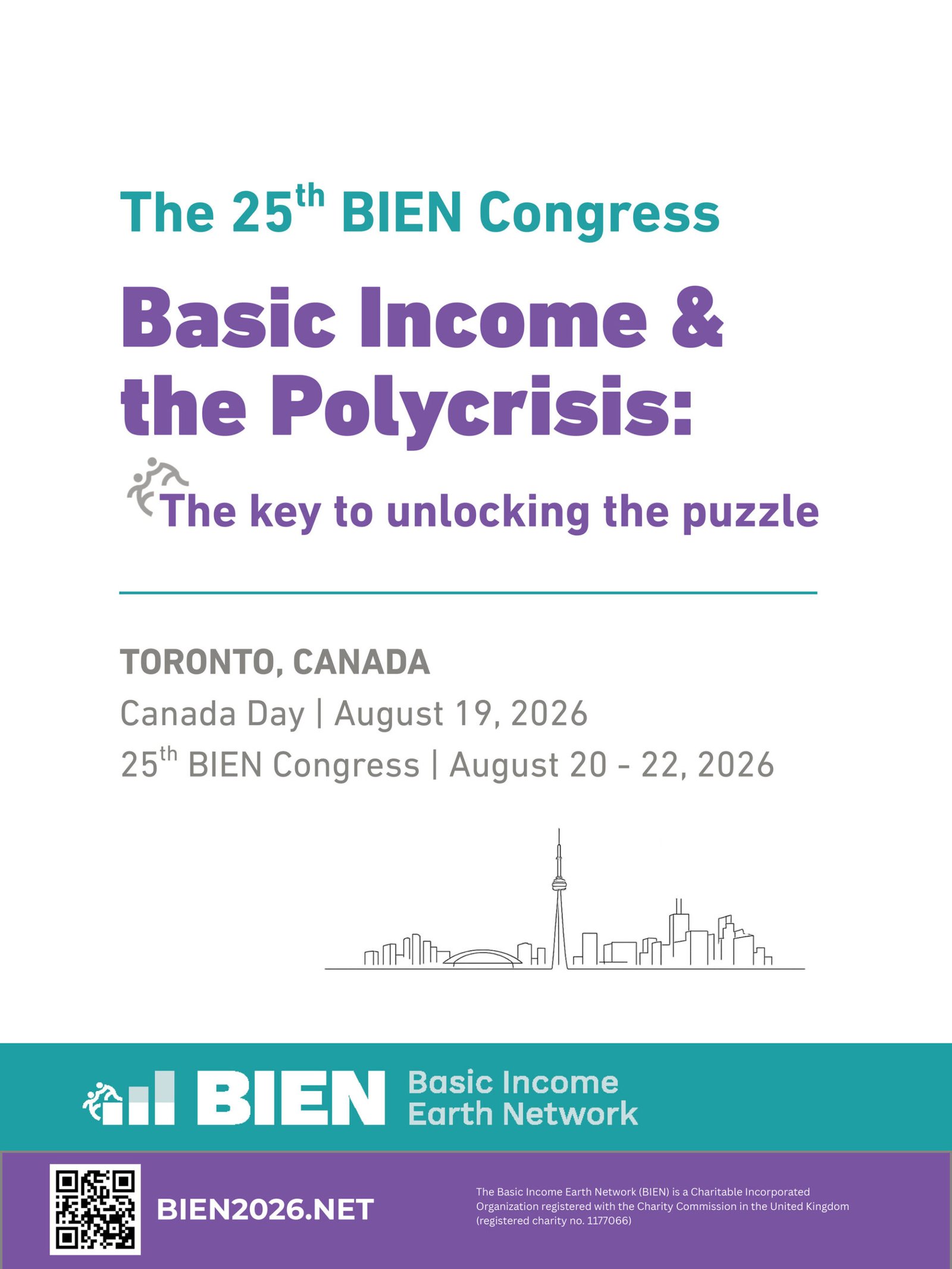
We're so looking forward to welcoming you to the BIEN 2026 Congress!
In this Booklet, Part 1 is about the host location. Part 2 will come later with BIEN Programme details for in-person and virtual participants.
What to expect in Toronto and Canada
— LOCAL HOSTS —
The Basic Income Canada Network was created in 2008 as a BIEN affiliate and is a federally-registered non-profit organization grounded in human rights. We’re privileged to work with many wonderful partners, including those on the BIEN 2026 Local Organizing Committee (LOC).
Canada, with its vast geographic and population diversity, has a federal government and 13 provincial and territorial ones. We are a wealthy country (although its distribution is not spread evenly) with a colonialist legacy and a high per-capita immigration rate for permanent residency. These and other factors play out in Canada’s income and wealth disparities, and the complexity of income security. Older adults and families with children have substantial national income guarantees with no behavioural conditions. Income security for other adults varies across the country but generally is far below a reasonable standard of living, full of gaps, stigmatizing, and conditional on paid work and other onerous requirements. Canada is also deeply enmeshed in the polycrisis navigating interlinked crises related to areas such as sovereignty, economic shifts, and warming in the Arctic that is faster than the global average.
The basic income movement in Canada reflects the country and how it has been affected by, and reacted to, the polycrisis. There are national, regional and municipal basic income groups, academics and practitioners in different fields, and politicians, all working actively to advance the movement. There have been two major pilots in different provinces, a community experiment, and statistical modelling of multiple basic income policy options has been done. The wider ecosystem of basic income proponents includes individuals and organizations concerned with Indigenous issues, race, gender, food security, climate change, health, labour, faith-based justice, tax fairness, democracy and more.
Toronto, Ontario is a world class city, one of the safest globally, a centre of innovation, advanced education, non-profit advocacy, academic excellence, and artistic creativity. You will see and hear its diversity on the streets everywhere. Toronto offers a welcoming environment for international visitors, especially those convening around public policy and social innovation.
Toronto Metropolitan University (TMU) engages in scholarly, research and creative activities that address real-world challenges and is known for its commitment to diversity and inclusion.
Congress Sponsors and Partners
The Congress would not be possible without the time and expertise of LOC partners, and funders and sponsors whose ranks we expect will only grow. Special thanks go to the University of Pennsylvania for early foundational funding. Our gratitude goes as well to many other allies and volunteers who have stepped up now and will come on board as we go.



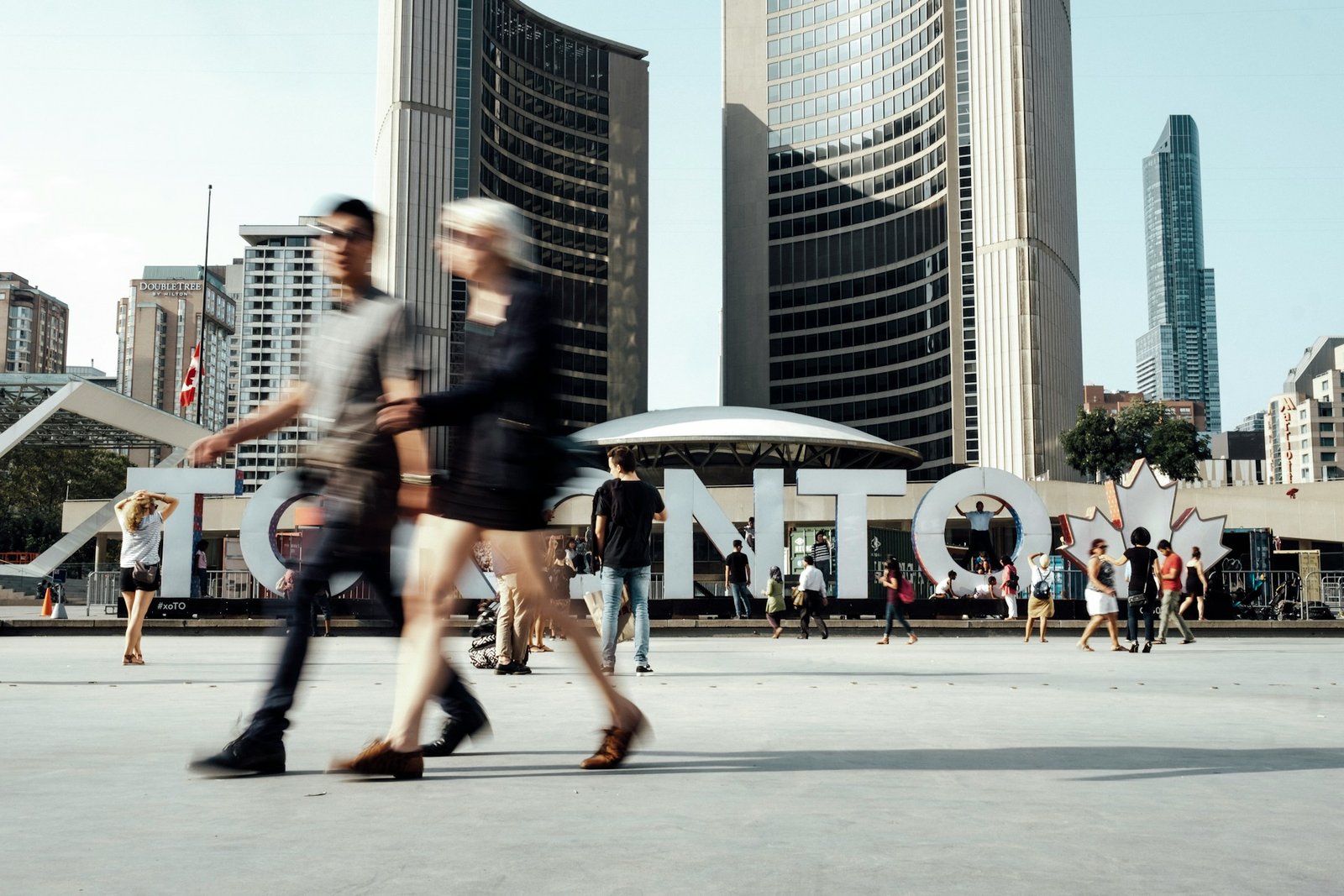
About Toronto History & Diversity
Toronto is situated on territory that for millennia was stewarded by Indigenous Peoples: the Huron-Wendat, Haudenosaunee, Anishinaabe, and the Mississaugas of the Credit. It became a French trading post and then a British town. Today, it is one of the most racially and culturally diverse cities in the world, with over 250 ethnicities and 190 languages represented. About half of its residents were born outside Canada. Inequality is also evident, as with other big cities. There are signs of great wealth and of people who are struggling with food insecurity, poverty, and lack of stable housing.
We often begin events like the Congress by acknowledging that so much of what many of us enjoy today has a come from the exploitation of land and labour, injustices that persist, while recognizing that diversity is a particular strength here. Toronto has been shaped by people from all over the world, and that diversity shows up not just in who lives here, but in how ideas are shared and debated.
In this expansive urban part of southern Ontario you’ll hear the term GTA (Greater Toronto Area) with a population of 7 million, and GTHA (Greater Toronto Hamilton Area). Hamilton was a major Ontario basic income pilot site and you’ll meet some of the people who were part of it.
With active universities, community organizations, and public institutions that foster dialogue and collaboration, this area makes it an especially good setting for the kind of international exchange that BIEN encourages.
Getting here
There are two airports and transit to downtown. For out-of-Canada visitors, check the travel & visa page. Even if you don’t need a visa there are new travel documents that might apply.
- Pearson International Airport is a major hub for flights from all parts of the world. The affordable UP Express then gets you from Pearson to downtown Union Station in a reliable 28 minutes.
- Billy Bishop Airport is smaller but has the advantage of being close to downtown, on Toronto Island, with a shuttle service to Union Station.
- Union Station is Toronto’s main transit hub for trains coming from other parts of Canada as well as Amtrack trains from the US, local subway, and regional GO trains and buses. You can eat and shop there too.
Toronto is on major highway routes, so coming by car is easy. Driving and parking in inner city Toronto, however, is challenging. Traffic can be heavy and parking expensive.
Getting Here
There are two airports and transit to downtown.
There are two airports and transit to downtown. For out-of-Canada visitors, check the travel page. Even if you don’t need a visa there are new travel documents that might apply.
- Pearson International Airport is a major hub for flights from all parts of the world. The affordable UP Express then gets you from Pearson to downtown Union Station in a reliable 28 minutes.
- Billy Bishop Airport is smaller but has the advantage of being close to downtown, on Toronto Island, with a shuttle service to Union Station.
- Union Station is Toronto’s main transit hub for trains coming from other parts of Canada as well as Amtrack trains from the US, local subway, and regional GO trains and buses. You can eat and shop there too.
Toronto is on major highway routes, so coming by car is easy. Driving and parking in inner city Toronto, however, is challenging. Traffic can be heavy and parking expensive.
Getting Around
Public transit is a good option.
The TTC (Toronto Transit Commission) runs the subway, buses and streetcars. It has a route planner to help you get around. Locals use a Presto card to tap entry to the subway station or bus. Visitors can load a temporary Presto card, but credit cards work too.
The site of the Congress is just steps from the TMU subway stop (formerly Dundas) on the Yonge St. line. Line 1 goes north/south, in a U-shape. It runs on both University Avenue and Yonge Street with the bottom of the U at Union Station. Line 2 goes east/west along Bloor/Danforth St. You can switch lines at Bloor and Yonge or at Bloor and St.George stations.
You can also use the TTC to get around to places outside Toronto.
Safety & Health
You can be at ease in Toronto.
Toronto is generally a very safe city, with low violent crime rates.
Visitors should exercise standard precautions, however, particularly in crowded tourist areas or when using public transit.
Neighbourhoods: Most areas are safe to walk around, even at night.
Petty Crime: Be aware of potential pickpocketing in busy tourist areas.
Vehicles: Avoid leaving valuables in vehicles, as smash-and-grab thefts can occur.
Emergency: Dial 9-1-1 for police, fire, or medical emergencies.
Toronto is also a city with great medical facilities, hospitals for care as well as medical research and teaching schools, many affiliated with the University of Toronto.
Note that Canadians are covered by public health care; visitors are advised to get travel insurance covering emergency medical costs.
Electrical standards are important to safety as well:
- Canada uses 120 volts, 60 Hz. This is lower than the 220-240V standard used in Europe, Asia, and other regions. Using a 220V appliance in Canada will cause it to run poorly or not at all.
Canadian outlets accept Type A (two parallel flat blades) or Type B (two flat blades and a round grounding pin). - If your devices are not dual-voltage (check the label for “Input: 100-240V”), you will need a voltage converter to safely use them.
- Hair dryers, straighteners, and kettles from abroad should generally not be used with converters, as they often exceed the converter’s power rating. It is safer to buy these locally.
Weather
Don’t plan according to ‘average’ temperature reports.
In late August days can be hot, and humid, as Toronto downtown is on the shore of Lake Ontario. In the evenings it can cool quickly as the sun sets and you will likely need a sweater or light jacket and skirt or pants covering your legs.
Media
Canada's hub for national news.
Toronto has a dense, diverse media landscape serving as the hub for Canadian national news, with major outlets including the Toronto Star and The Globe and Mail (newspapers), and CBC/Radio-Canada and CTV Toronto (television/news). They have all covered basic income developments and we will encourage them to give attention to the Congress. The Hamilton Spectator also covers basic income news well. The Hill Times (that Parliamentarians read) is based in Ottawa and it has also run some great pieces on basic income.
Extracurricular Ideas
There is an almost infinite variety of things to see and do in Toronto.
Learn more about what city government does here. You can look way up and see the CN Tower and then down for the PATH in Toronto, the world’s largest underground shopping complex (and indoor walking routes if it’s raining). We’ve provided some ideas below and you can check out more at destinationtoronto.com.
- The TMU meeting location at the Ted Rogers School of Management is very modern. It sits beside the Eaton Centre, with multi-level shopping. Tucked in behind these modern structures is the Holy Trinity Church built in 1847. Much of Toronto is like that, a fascinating mix of old and new.
- The University of Toronto has beautiful old buildings, and the Ontario legislature as well, at Queen’s Park. The Old 1889 City Hall is just down the block from the modern one at Nathan Philips Square.
- Main visitor attractions include the Royal Ontario Museum (the ROM has vast collections and is architecturally unique), the Art Gallery of Ontario (AGO), the theatre and entertainment district, High Park, sport events, the Distillery District, the Toronto Zoo (with a strong commitment to animal care and wildlife conservancy). There are many more attractions in Toronto, and many not far away as well.
- The annual Canadian National Exhibition (CNE) will open August 21 and runs until Labour Day (September 7). “The Ex” has midway rides, stage performances, the CNE Farm, and other attractions.
- Food lovers will love Toronto. There are countless restaurants and bars at all price points. Some of the best food is off the beaten path. With a bit of research, it is possible to find amazing food from all around the world, with creative adaptations, at reasonable prices.
More to come!
Check back with us soon.
Watch here for details on the pre-congress Canada Day on August 19.
We’ll also fill you in on other hospitality, such as the meals provided at the Congress, and a reception being planned for one evening.
Attend the Congress
Share your skills and perspectives to help move the conversation from ideas to action—and make a meaningful impact alongside others who care about real change.