

Who We Are
Local Organizing Committee

What was once a niche academic idea is now a public conversation—driven forward by people like those on our Local Organizing Committee.
Until recently the topic of UBI was discussed rarely outside the academic field or within niche political circles.
It’s groups like ours that have brought then debate to the public fuelled by the COVID 19 pandemic, basic income has now broken out of the academic discussion and niche political circles.
Our Local Organizing Committee is made up of people who reflect different dimensions of the polycrisis we are facing and Canada’s geographical size and population diversity. Each member, whether academic, policy thinker or community organizer is connected to wider networks across the country and around the globe.
Hosting the BIEN congress is a privilege helps us to advance knowledge and action . Igniting debate around the topic and furthering its publicity. We are lucky to have the contribution of everyone on the LOC and without them the Congress would not be possible.
Meet the LOC
Our Leaders

Sheila Regehr
Chair, Basic Income Canada Network (BICN)
Sheila is a founding member of BICN (2008) and Chair since 2014. She is a retired senior federal public servant who worked in income security policy (as well as federal-provincial/territorial and international relations) with a particular focus on gender equality, and a former Executive Director of the National Council of Welfare which published statistics, research and policy studies. She has a B.A. (Political Science, University of Guelph) and M.S.W (Social Policy, Carleton University) and extensive experience organizing consultations and conferences (e.g., NABIGs, a Commonwealth Ministerial, and the 2024 BIG Forum in Ottawa).
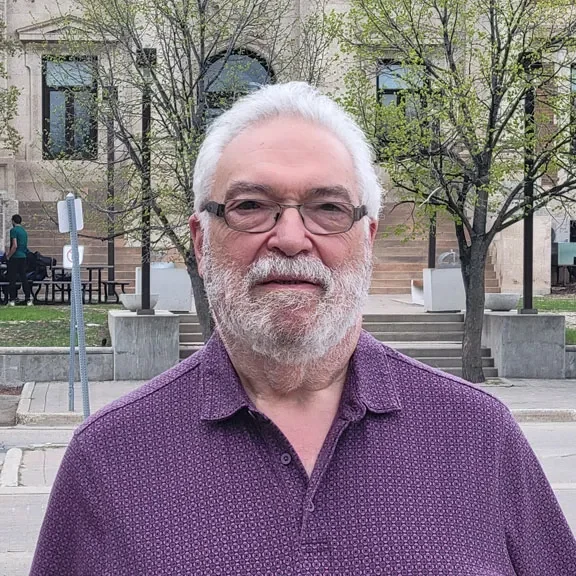
Sid Frankel (PhD)
University of Manitoba, BICN Executive Board Member
Sid is a senior scholar with the Faculty of Social Work. He holds a Ph.D. In Social Welfare from the University of California at Berkeley and M.S.W. and B.S.W. Degrees from the University of Manitoba. His research program includes poverty reduction policy, especially basic income, and the nonprofit sector. He was a principal organizer of the 2016 NABIG. He is also a long term member of the national steering committee of Campaign 2000 to End Child Poverty and chair of the Board of Basic Income Manitoba.

Ben Earle
BICN General Manager and CEO of Feed the Need in Durham
Ben is a core member of the BICN team and a highly regarded leader in the non-profit and community services sector as CEO of Feed the Need in Durham (east of Toronto), leading the region’s response to food insecurity. Bringing expertise in major aspects of the polycrisis in Canada, both in responding to immediate needs and working for solutions, is part of regional and national networks and organizing bodies to address poverty, housing and homelessness, labour market disruption, basic income and food security. Ben has extensive organizing experience, including his key role in the 2024 Basic Income Forum in Ottawa. Ben is trained as an applied social scientist with a BA in Applied Anthropology and MA in Criminology and Policy.
Our Members

Amy Castro (PhD)
University of Pennsylvania
Amy Castro is an Associate Professor at the University of Pennsylvania in the School of Social Policy & Practice and is the Co-Founder and faculty director of the Center for Guaranteed Income Research. Her work explores economic mobility, guaranteed income, innovation, and disparities in housing and lending. She served as the Co-PI of the Stockton Economic Empowerment Demonstration under former Mayor Michael Tubbs which, lead to a proliferation of experimentation with unconditional cash across the U.S. Dr. Castro is the Co-PI of 30 applied cash-transfer studies housed at CGIR where she currently advises more than 20 Mayoral teams, state, and county legislators on unconditional cash research. Her work on guaranteed income has been funded by the Robert Wood Johnson Foundation, the Hilton Foundation, the Monarch Foundation, the City of Los Angeles, LA County, the City of Newark, the Yellow Chair Foundation, the City of Oakland, the Social Impact Fund, and the Economic Security Project. Dr. Castro’s research is featured often in the popular press including the NY Times, the Washington Post, the Atlantic, the New Yorker, the Nation, the Economist, the LA Times, CNN, NBC, PBS, and National Public Radio.

Tom Cooper
Director of the Hamilton Roundtable for Poverty Reduction
Tom leads community-based advocacy focused on income security, poverty reduction, and inclusive public policy. He is a co-facilitator of the Ontario Basic Income Network and was deeply engaged in the Ontario Basic Income Pilot, workingwith participants and community partners to support implementation and elevate lived experience. He helped organize the 2018 NABIG in Hamilton and the 2024 BIG Forum in Ottawa, bringing together advocates, researchers, and policymakers. Tom teaches Civic Engagement and Resource Development at Mohawk College, and writes for the Hamilton Spectator. He brings more than two decades of experience in social policy, media commentary, and community organizing.

Jurgen De Wispelaere (PhD)
BIEN, University of Bath
Jurgen De Wispelaere is a former occupational therapist turned political theorist and policy scholar. He is a Visiting Professor at the Götz Werner Chair of Economic Policy & Constitutional Theory in Freiburg. His research focuses on the politics of basic income. He is the research coordinator of BIEN and a scientific advisor of the Catalan Basic Income Pilot project.

Mohammad Ferdosi (PhD)
Toronto Metropolitan University
Mo is a Research Fellow at CERC Migration & Integration / Bridging Divides at TMU. He previously held a Postdoctoral Fellowship in Critical Policy Studies at TMU and earned his PhD in Political Science at McMaster University in 2022, with earlier training in Sociology and Economics. His research expertise lies in public policy, labour legislation, and welfare programs, with a particular focus on basic income. He has authored publications on the Ontario Basic Income Pilot and has contributed to projects with UNESCO and the ILO.
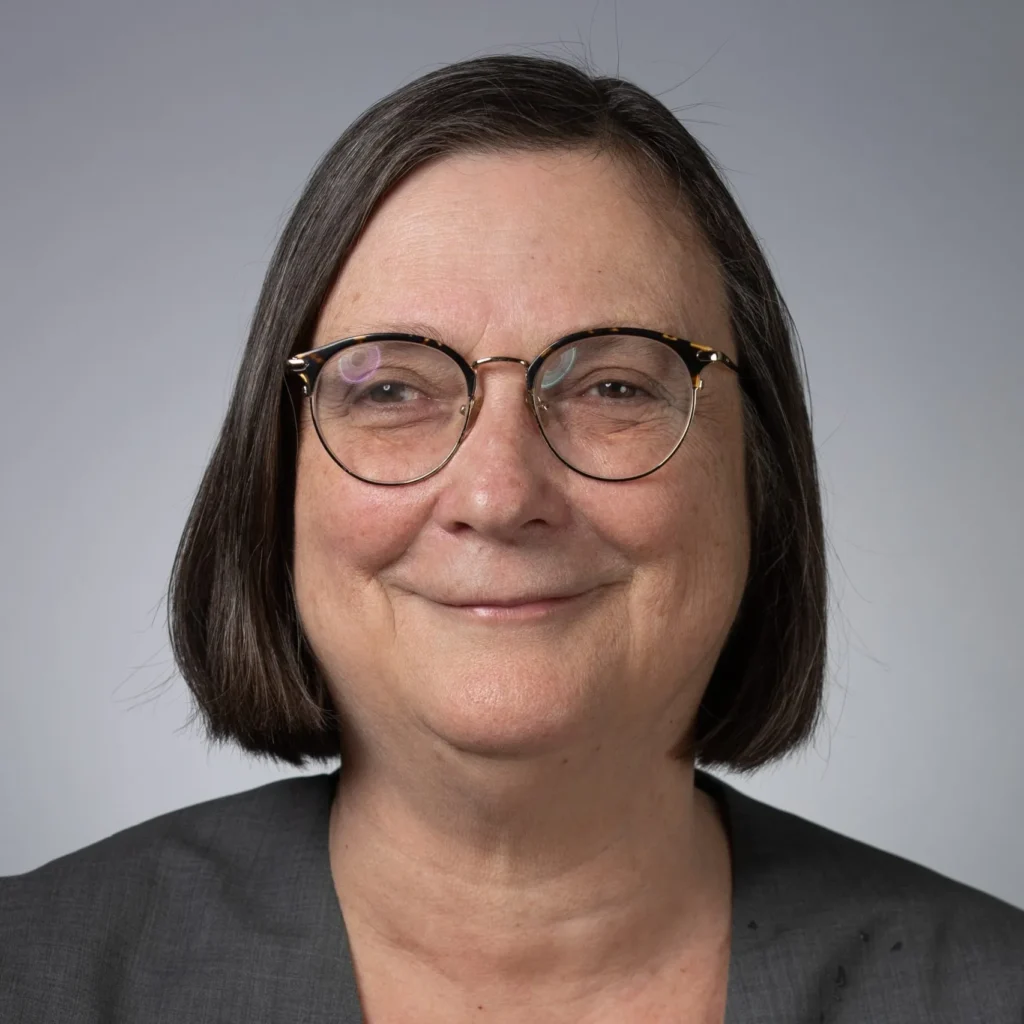
Evelyn L Forget (PhD)
University of Manitoba
Evelyn is a Professor of Economics and Community Health Sciences at the University of Manitoba. Her research examines the health and social implications of poverty and inequality, and she is often called upon by governments, First Nations and international organizations to advise on poverty, inequality, health and social outcomes. She is an Officer of the Order of Canada, and a Fellow of the Royal Society. Her most recent books are Basic Income for Canadians: from the COVID-19 emergency to financial security for all (Lorimer and Co., 2020) and (with Hannah Owczar) Radical Trust: Basic Income for Complicated Lives. A new book is forthcoming.

Josephine Grey
St. Jamestown Community Co-operative, Toronto
Josephine is a human rights advocate, community organizer and public speaker. She is a founder of Low Income Families Together, Foodshare, the Center for Social Justice, the Income Security Advocacy Centre, and the St. James Town Co-operative and its Oasis project on food and water security. She is a champion of youth empowerment, climate change resilience and basic income. Her international work has taken her to 7 continents and involved hundreds of organizations and presentations to UN human rights bodies. She was organizer and speaker at the NABIG in Hamilton and Canada’s 2024 BIG Forum in Ottawa.

Neil Howard (PhD)
University of Bath, UK
Neil is an anthropologist of development turned social protection scholar. His work ethnographically examines the governance of exploitative, ‘indecent’ and ‘unfree’ labour and in particular the various forms of it targeted for eradication by the Sustainable Development Goals (SDGs). It further looks at innovative forms of labour and social protection – most notably Unconditional Basic Income (UBI) combined with participatory forms of community organizing – and explores the intersection of these interventions with various public policy challenges. Neil co-leads two large international policy experiments looking at this combination, in Dhaka, Bangladesh, and Hyderabad, India.
James Mulvale (PhD)
University of Manitoba
Jim is in the Faculty of Social Work, was a principal organizer of the NABIG in Winnipeg and is a former BICN Executive board member. He holds a PhD (Sociology, MacMaster), M.A. (Sociology, University of Windsor), M.S.W. (Carleton) B.A. (Psychology, Western). His research interests focus on basic income and related topics on economic security, theoretical issues in social work (including justice and environment), and distance education and digital pedagogy in social work. He teaches courses on social policy, research, community development, and epistemology and theory in social work. He lives close to Toronto.

Elaine Power (PhD)
Queen’s University, Kingston
Elaine is a Professor in the School of Kinesiology & Health Studies. She researches the intersections between food, health and class, with a particular interest in food insecurity. She is a founding member of the Kingston Action Group for a Basic Income Guarantee and co-author, with Jamie Swift, of The Case for Basic Income: Freedom, Security, Justice. She is working with a small team of scholars and artists to create a graphic novel introducing children and youth to the structural factors that lie at the root of food insecurity, encouraging them to consider solutions beyond the traditional charity model.

Tracy Smith-Carrier (PhD)
Royal Roads University, Victoria, British Columbia
Tracy is the Canada Research Chair in Advancing the UN Sustainable Development Goals in the School of Humanitarian Studies at Royal Roads. Her research touches upon many fields, including access to income and food security, social assistance, health equity, basic income, and climate justice. Tracy is an adjunct research professor at School of Nursing at Western University, a research affiliate at the Centre for Human Rights Research at the University of Manitoba, chair of the National Basic Income Forum’s Strategic Planning Committee, and editor of the Taylor & Francis journal Critical Policy Studies.

Jiaying Zhao (PhD)
University of British Columbia, Vancouver
JZ is an Associate Professor in the Department of Psychology and the Institute for Resources, Environment and Sustainability at UBC, a faculty affiliate with the Center for Effective Global Action at UC Berkeley, and an invited researcher at J-PAL at MIT. She is a Killam Research Prize recipient and UBC Sauder Distinguished Scholar. She uses psychological principles to design behavioural solutions to address financial and environmental sustainability challenges. She examines the cognitive consequences of poverty and designs cash transfer interventions to alleviate the psychological burdens in low-income individuals. She develops behavioural interventions to encourage climate action and biodiversity conservation

Stacia West (PhD)
University of Tennessee
Stacia West is an Associate Professor at the University of Tennessee’s College of Social Work and the co-Founder and Director of the Center for Guaranteed Income Research at the University of Pennsylvania. Dr. West holds a BA in Women’s Studies and Philosophy and a Masters of Science in Social Work from the University of Tennessee. She holds a PhD in Social Welfare from the University of Kansas. She is the co-PI of the Stockton Economic Empowerment Demonstration (SEED), the first modern city-led guaranteed income experiment in the US. Her research focuses on universal basic income, unconditional cash-transfers, women’s poverty and wealth inequality, and the affordable housing crisis. Her research portfolio includes numerous grants, state and non-profit evaluation contracts, the Robert Wood Johnson Foundation, and the Asset Funders Network. Her work has been published in leading social science journals including the Journal of Society for Social Work and Research, Social Science and Medicine, The Journal of Family and Economic Issues, and The Gerontologist, and is regularly featured in major national media outlets.
Attend the Congress
Share your skills and perspectives to help move the conversation from ideas to action—and make a meaningful impact alongside others who care about real change.